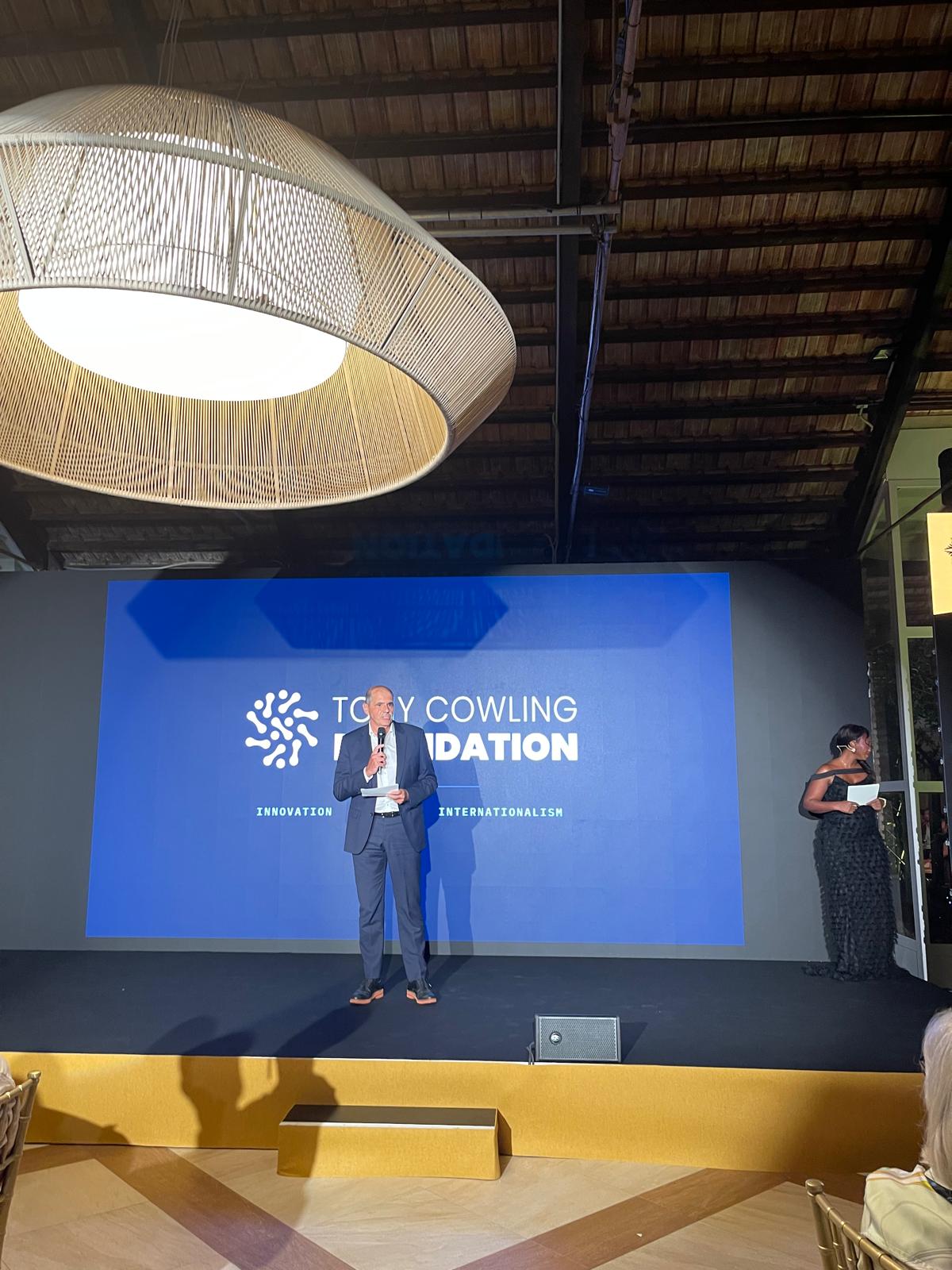
Board Briefing: Award Winners and Innovation Significance
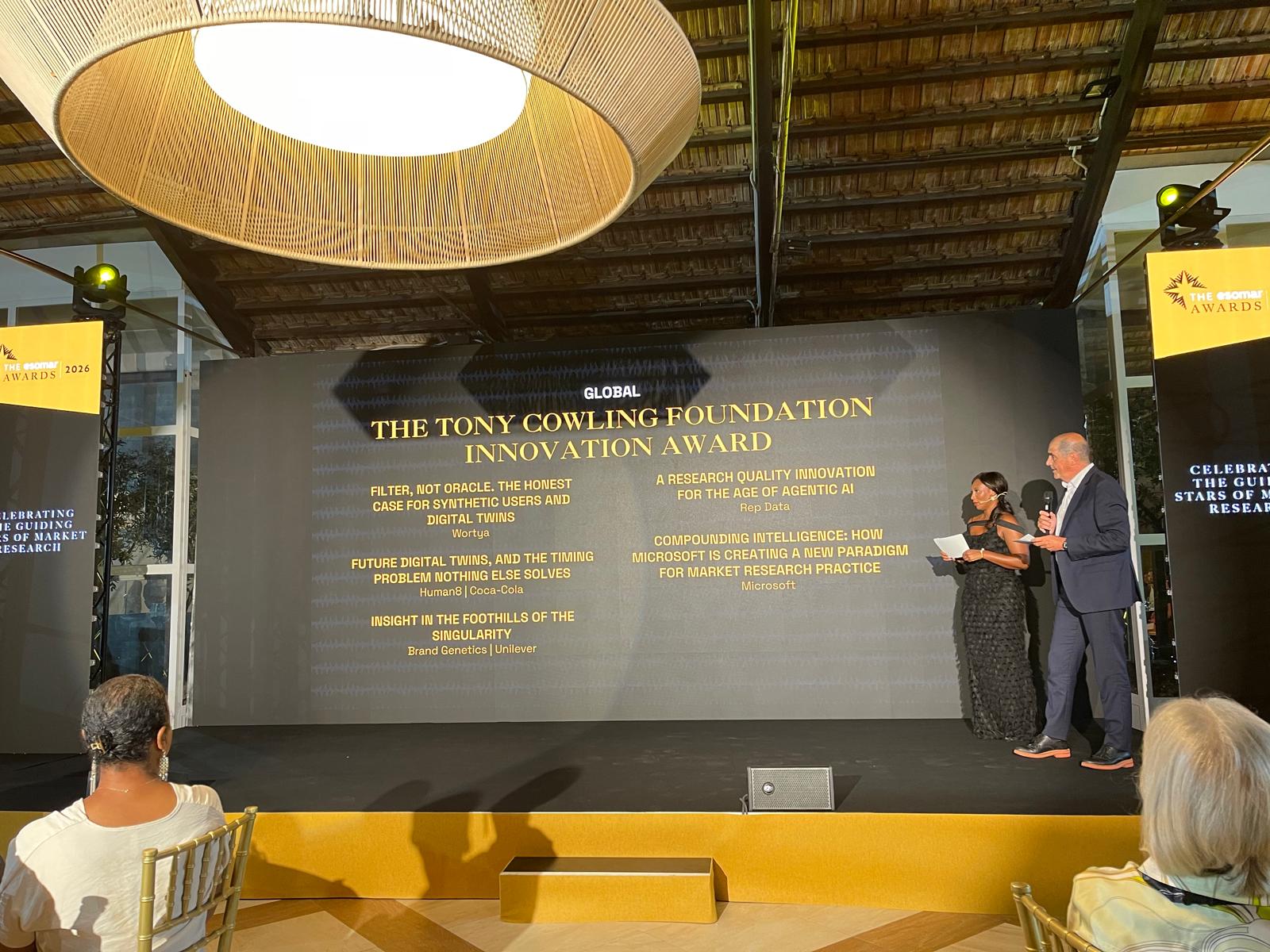
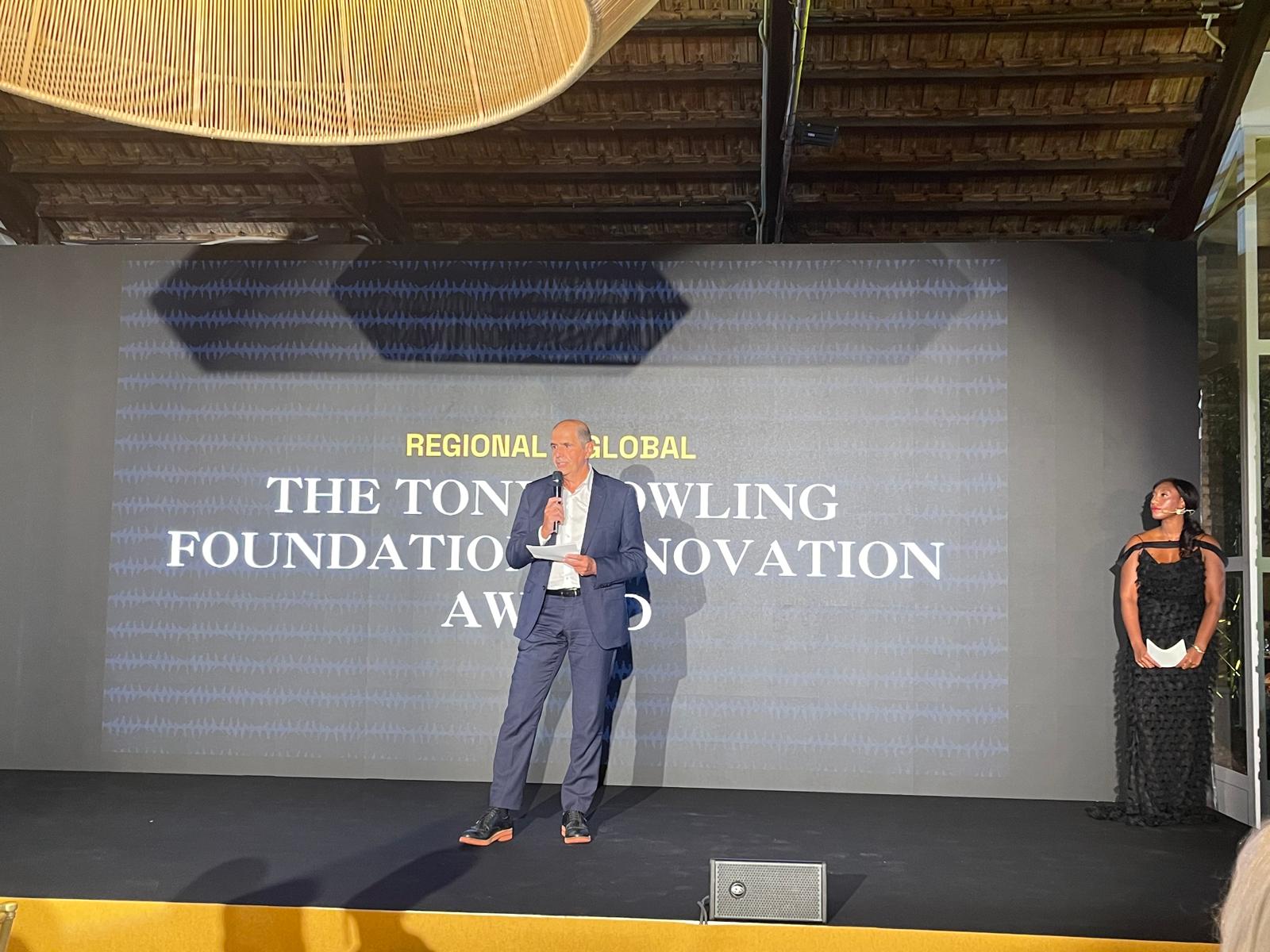
The 2026 Tony Cowling Foundation Innovation Award produced a particularly strong group of winners, with artificial intelligence running through all four recognised projects but being applied to very different problems.
What is striking is that these are not simply examples of organisations using generative AI to make existing research processes faster. Collectively, the winners point towards potentially new research products, methodologies and business models: simulating future consumers; deploying AI agents as innovation partners; establishing evidence-based limits for synthetic respondents; and creating AI-powered infrastructure capable of testing customer communications continuously and at scale.
This is particularly relevant as the Tony Cowling Foundation develops its ambition to become an innovation catalyst — identifying promising ideas within research, insights and data analytics and helping connect them with investors, venture capital, private equity, strategic partners and potential customers capable of accelerating their development.
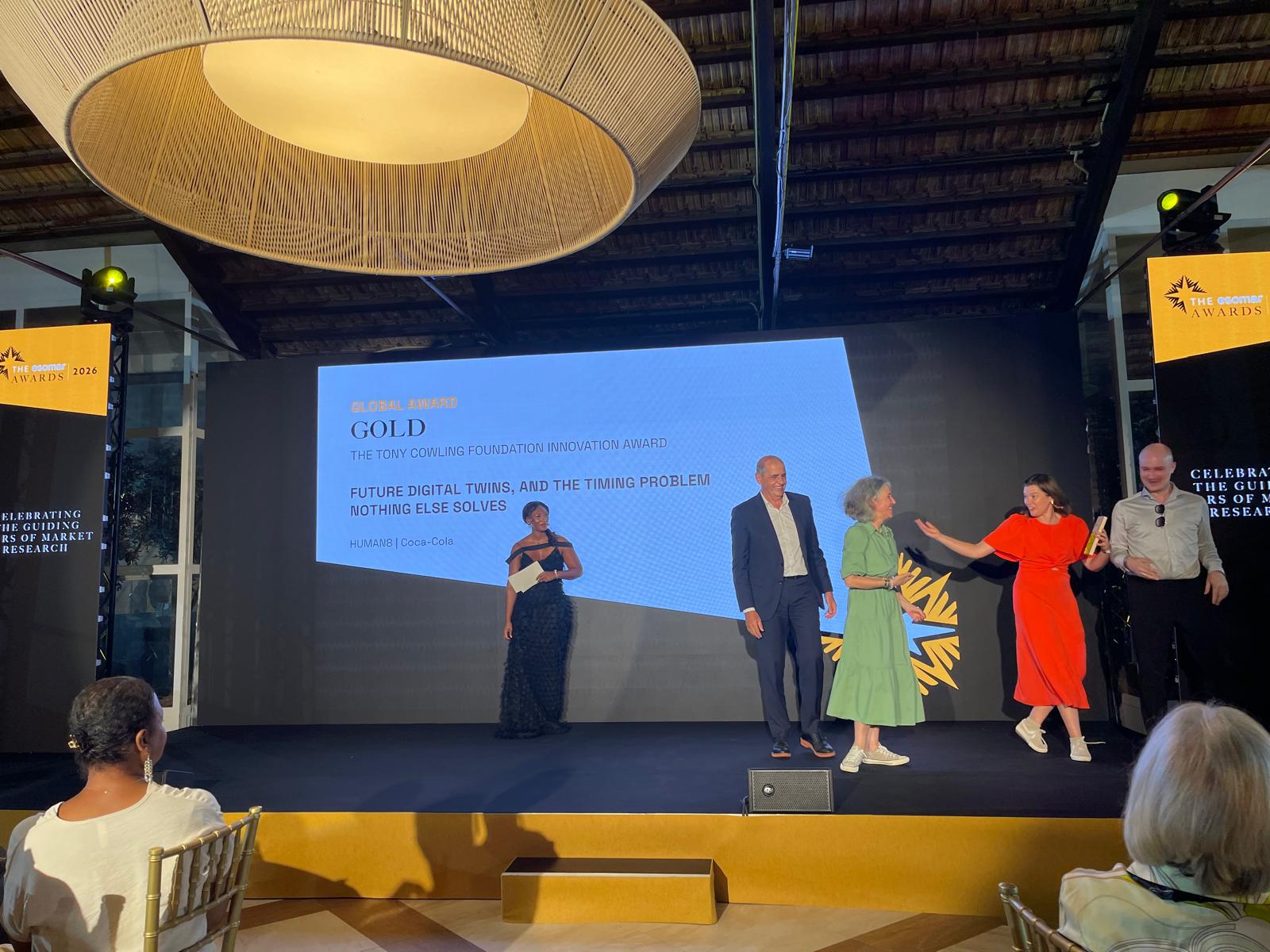
Future Digital Twins, and the Timing Problem Nothing Else Solves
Human8 and The Coca-Cola Company tackled a fundamental problem in consumer insight: businesses frequently have to make decisions today about products and markets that will exist several years into the future, while conventional research largely tells them about consumers as they are now.
Their work develops the concept of the digital twin beyond simply creating an AI representation of today’s consumer. Human8’s approach begins with rich conversations and evidence from real people, supplemented by cultural understanding and qualitative expertise. AI-powered twins can then be interrogated repeatedly to explore ideas and scenarios. The next development — demonstrated through its work with Coca-Cola — is the future digital twin, which attempts to model how consumer needs and behaviours could evolve under different possible futures.
Importantly, the proposition is not that AI can predict the future with certainty. Instead, organisations can use these simulated consumers to stress-test strategies and explore plausible future scenarios before committing significant money to product, brand or portfolio decisions. Human8 has been explicit that its system also distinguishes between responses grounded in actual consumer evidence and areas where AI is extrapolating beyond that evidence.
The innovation potentially changes the timing and role of research. Instead of insight primarily describing today’s consumer or evaluating an idea once it has been developed, research can move upstream into strategic decision-making — helping organisations explore what tomorrow’s consumer could want before tomorrow arrives.
For Coca-Cola, the work has been associated with its advanced hydration portfolio, illustrating the potential application to genuine long-term innovation and portfolio decisions rather than simply experimental AI research.
This is potentially much bigger than an individual research methodology. A credible, validated system of future consumer twins could become an always-available decision-support infrastructure for major companies.
The scalable opportunity lies in turning accumulated human research, cultural intelligence and proprietary client data into an interactive asset that can be consulted repeatedly. That has implications for recurring revenue models, software/platform development and intellectual property — and potentially moves part of the insights industry from selling individual research projects towards selling persistent intelligence capability.
The particularly attractive element from an investment perspective is the combination of AI scalability with proprietary human evidence. The defensibility may ultimately lie not simply in the AI model, which others can access, but in the quality of the underlying human data, methodology, validation and cultural intelligence.
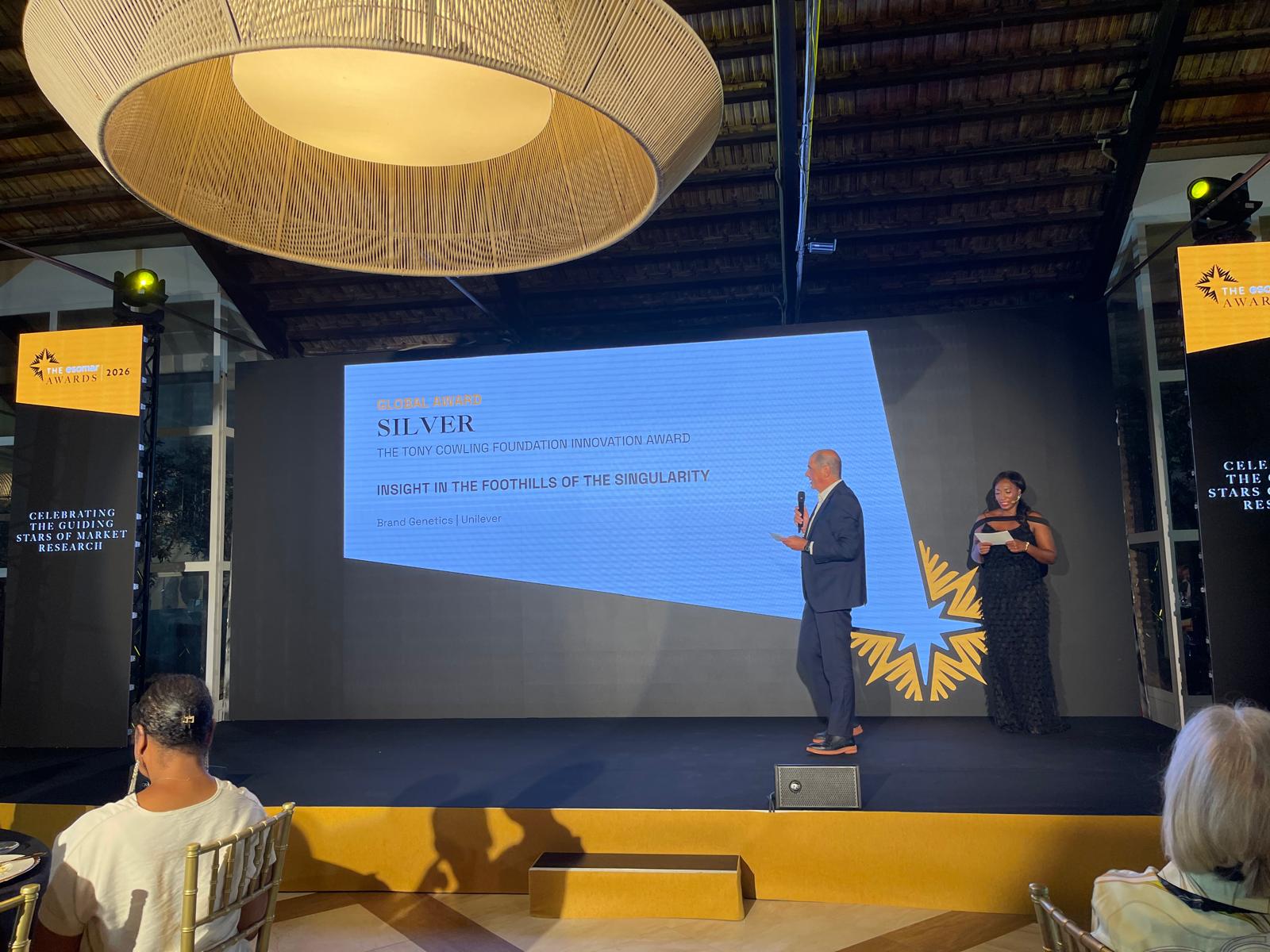
Insight in the Foothills of the Singularity
Brand Genetics and Unilever approached AI from a different direction: what happens to the role of the insight professional when AI dramatically increases our ability to generate and develop ideas?
At the centre of the project is Lovelace, a custom agentic AI innovation platform developed to generate high-quality innovation concepts using open-web expert knowledge. Rather than asking AI simply to imitate consumers, the system is designed to act as a cognitive and innovation partner, sourcing and synthesising expert knowledge to help explain why observed consumer behaviours occur and what opportunities might follow from them.
The underlying division of labour is important. Humans remain responsible for observing consumers in the real world — identifying what people actually do and bringing context, empathy and judgement. The AI system takes on much of the intensive work involved in sourcing, connecting and synthesising expert knowledge. This potentially gives human researchers a much larger intellectual resource from which to develop innovations.
The team describes a future in which the constraint is no longer the ability to generate ideas. Instead, human expertise increasingly shifts towards judgement, curation, context and deciding which ideas matter.
This project is interesting because it does not position AI simply as a cheaper researcher. It asks how AI could create a fundamentally different research and innovation workflow.
Rather than replacing the human researcher, Lovelace potentially changes where human value is concentrated. Machines can undertake enormous amounts of knowledge retrieval, synthesis and initial ideation, while humans focus on observing reality, understanding nuance and making commercial judgements.
The result is a potentially powerful model of human × AI collaboration, rather than human versus AI.
There is a particularly interesting commercial dimension here. Brand Genetics has already invested in AI research-technology company Synthsight, whose broader vision involves AI “digital workers” or specialist AI research assistants working alongside humans.
That suggests a pathway beyond consultancy towards a scalable technology proposition. Specialist AI agents trained around research, innovation, behavioural science or other expert disciplines could potentially become a new category of professional software — effectively providing organisations with on-demand synthetic expertise.
For the Foundation, this is an excellent example of the type of innovation that may sit at the boundary between market research, professional services and investable technology. The opportunity is not merely to automate today’s consultancy model, but potentially to productise elements of expert knowledge work.
Filter, Not Oracle: The Honest Case for Synthetic Users and Digital Twins
Wortya addressed perhaps the most important question surrounding synthetic respondents: can we actually trust them?
Rather than making broad claims for or against synthetic research, Wortya conducted a substantial validation exercise — its Behavioural Validity Evaluation (BVE) Study — involving more than 11,000 synthetic interviews across six commercial large-language models and three countries, with results validated against real consumer transaction data.
Its conclusion is deliberately nuanced: synthetic users should be regarded as “filters, not oracles.”
The research found that synthetic respondents can perform well for some tasks but poorly for others. They were considerably stronger at recovering identity-level attributes — areas such as positioning and attitudinal segmentation — than at predicting operational behaviours such as SKU-level purchasing or switching. Intriguingly, the study also found that adding more demographic or personality information does not automatically improve accuracy and can sometimes reduce it.
One particularly important finding was that how the question or stimulus is designed can matter dramatically more than which underlying AI model is selected. This moves the debate away from simply choosing the newest or most powerful LLM towards developing robust research methodology around synthetic populations.
Wortya’s innovation is valuable precisely because it introduces scepticism and empirical validation into one of the fastest-growing areas of research technology.
The industry is rapidly developing synthetic respondents and digital twins, but commercial enthusiasm can run ahead of evidence. Wortya’s work starts to answer the more sophisticated question: not “Are synthetic respondents good or bad?” but “For which research questions are they reliable, under what conditions, and how should we validate them?”
That could prove extremely important to the credibility of the entire synthetic research category.
The commercial opportunity may ultimately be less about creating another synthetic respondent platform and more about becoming part of the validation, calibration and quality infrastructure surrounding synthetic research.
If organisations increasingly use synthetic populations for commercial decisions, they will need confidence measures, benchmarks, methodological standards and mechanisms for determining when synthetic evidence is sufficiently reliable — and when real human research remains essential.
There is therefore a possible analogy with other technology markets: once a new capability becomes widespread, an accompanying market develops around testing, verification, governance and quality assurance.
For the Foundation, Wortya demonstrates that investable innovation does not always mean inventing the newest AI capability. There can be equally important opportunities in creating the trust infrastructure that allows a new technology to be adopted safely at scale.
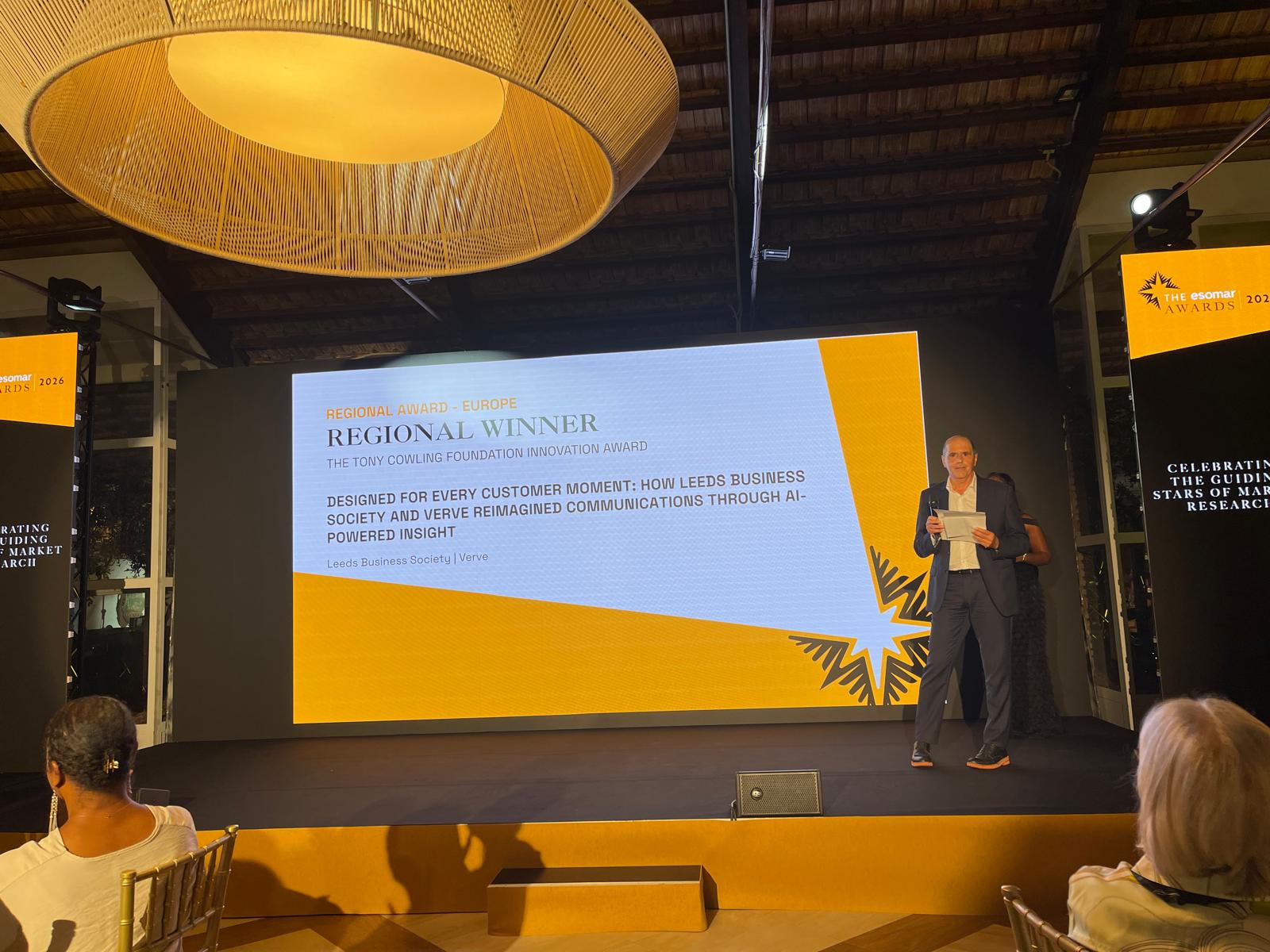
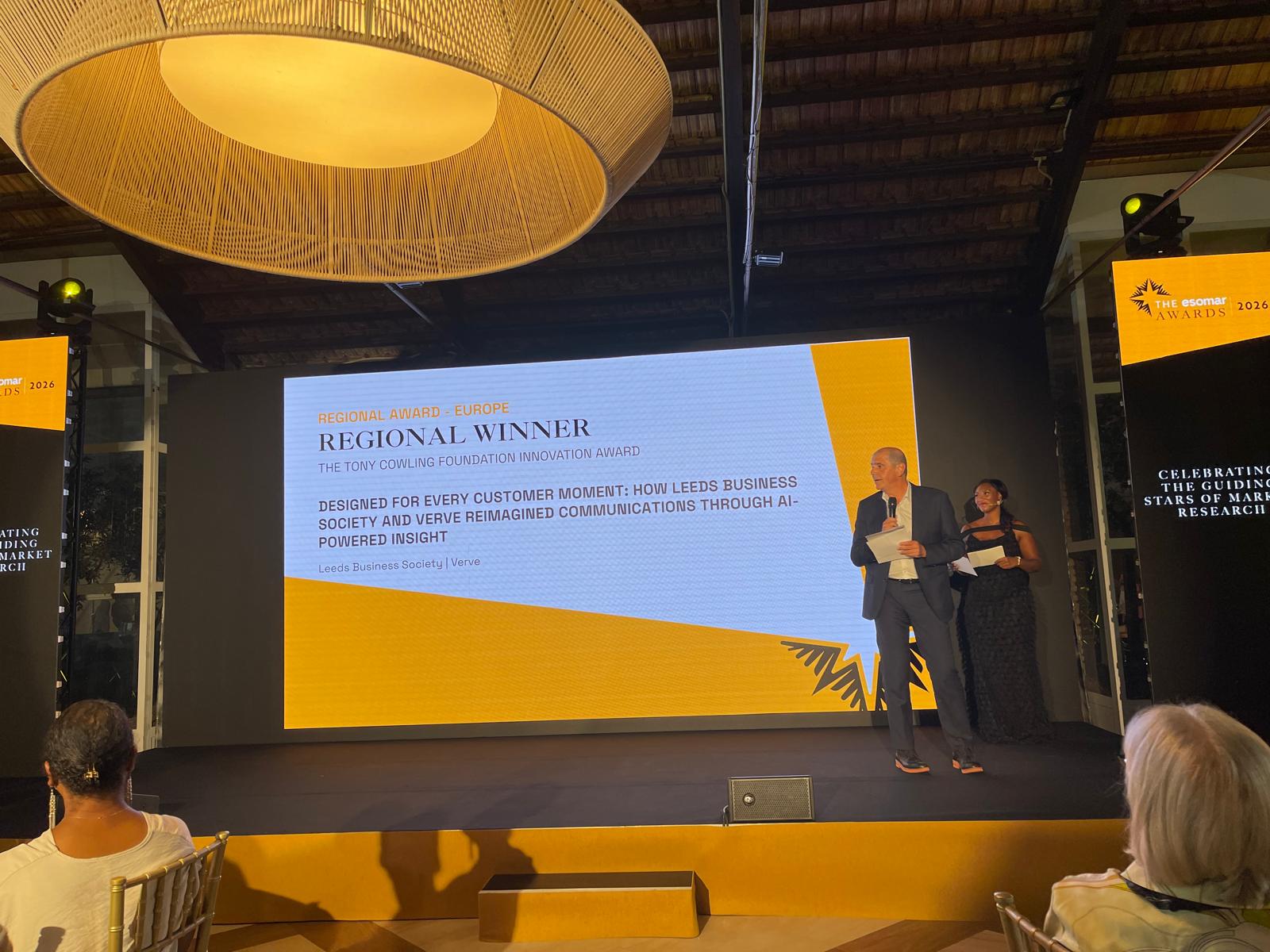
Designed for Every Customer Moment: How Leeds Building Society and Verve Reimagined Communications Through AI-Powered Insight
The European Regional winner applies AI to an extremely practical and commercially significant challenge: ensuring that customer communications in a regulated financial-services environment are clear, appropriate and genuinely understood.
Leeds Building Society and Verve created a specialist communications-testing AI capability using Verve Intelligent Personas & Simulations (VIPS). Crucially, these personas are grounded in Leeds Building Society’s own proprietary customer insight and regulatory frameworks rather than being generic AI-created consumers.
The problem they are solving is highly tangible. A financial-services organisation produces large volumes of customer communications and has regulatory as well as ethical obligations to ensure those communications can be understood — including by vulnerable customers. Traditional research can provide that evidence, but repeatedly testing large numbers of communications with human participants is costly and time-consuming.
The Verve/Leeds system allows communications to be tested rapidly against AI personas grounded in real customer evidence, increasing the Society’s capacity to assess communications across its customer base. The work has included the particularly demanding challenge of testing communications intended for vulnerable customers, where clarity and customer understanding are critical.
This is perhaps the clearest example among the winners of AI moving from an experimental research environment into an operational business process.
Instead of commissioning research periodically, insight becomes embedded within the organisation’s workflow. A communication can potentially be created, tested against evidence-grounded customer personas, improved and retested much more rapidly than through conventional research alone.
It therefore moves insight from being something that happens after somebody asks a research question towards becoming part of the infrastructure through which the business operates.
The potential scalability is substantial because Leeds Building Society’s problem is not unique.
Banks, insurers, building societies, utilities, telecommunications companies, healthcare organisations and government bodies all produce high volumes of communications that need to be clear, compliant and understandable to different audiences. Many operate under regulatory requirements to demonstrate that customers are being treated fairly and understand important information.
A validated AI communication-testing system could therefore evolve from a bespoke research application into a repeatable B2B RegTech/InsightTech product.
That is precisely the sort of crossover opportunity that may be particularly interesting to investors: technology originating within market research but addressing a much larger enterprise problem involving compliance, customer experience, communication and risk.
Taken together, the 2026 winners suggest that the most important innovation occurring in research may not simply be “AI making research faster”.
Something more structural appears to be happening.
Human8/Coca-Cola moves research forward in time — from understanding today’s consumer towards exploring tomorrow’s.
Brand Genetics/Unilever changes the division of labour — allowing AI agents to undertake knowledge synthesis and ideation while humans concentrate on observation, empathy, judgement and curation.
Wortya tackles the trust problem — establishing when synthetic consumers are useful and when they should not be trusted.
Verve/Leeds Building Society moves research into the operational workflow — transforming insight from an occasional project into an always-available decision and quality-control capability.
For the Tony Cowling Foundation, this creates an interesting strategic opportunity.
The Award can become more than an annual recognition programme. It potentially provides the Foundation with an innovation discovery mechanism: each year identifying emerging technologies, methodologies and businesses before their full commercial potential is necessarily apparent.
The Foundation could therefore develop a role between the innovators emerging from the research and insights community and the capital, expertise and customers required to scale them.
That might ultimately create a distinctive proposition:
Identify → Validate → Showcase → Connect → Accelerate
The Award identifies exceptional innovation. The Foundation’s industry network helps validate its relevance. ESOMAR and other partners provide international visibility. The Foundation then brings promising innovators into contact with venture capital, private equity, corporate investors, technology partners and prospective customers.
In that sense, the 2026 winners provide an unusually good illustration of what an innovation catalyst for the global research, insights and data industry could actually look like.

Are you looking for a new website? Contact Outrank Today